
ABOUT Cokver
Headquartered in Dongguan, COKVER stands as one of China’s leading industrial valve manufacturers.
COKVER is a professional valve manufacturer with over 20 years of experience. We are dedicated to manufacturing and supplying innovative valve and actuator series products. Leveraging our comprehensive industrial chain, we ensure zero-defect delivery within the shortest possible lead times.
Our core product portfolio includes manual valves, pneumatic valves, and electric valves. Our valves enable precise flow control and feature extended service life, making them widely applicable across diverse industries such as chemical, petroleum, fire protection, and power generation.
Our company leverages cutting-edge design thinking and continuous innovation to develop industrial valves that not only meet current industry demands but also anticipate future operational needs, setting new benchmarks in functionality and efficiency.
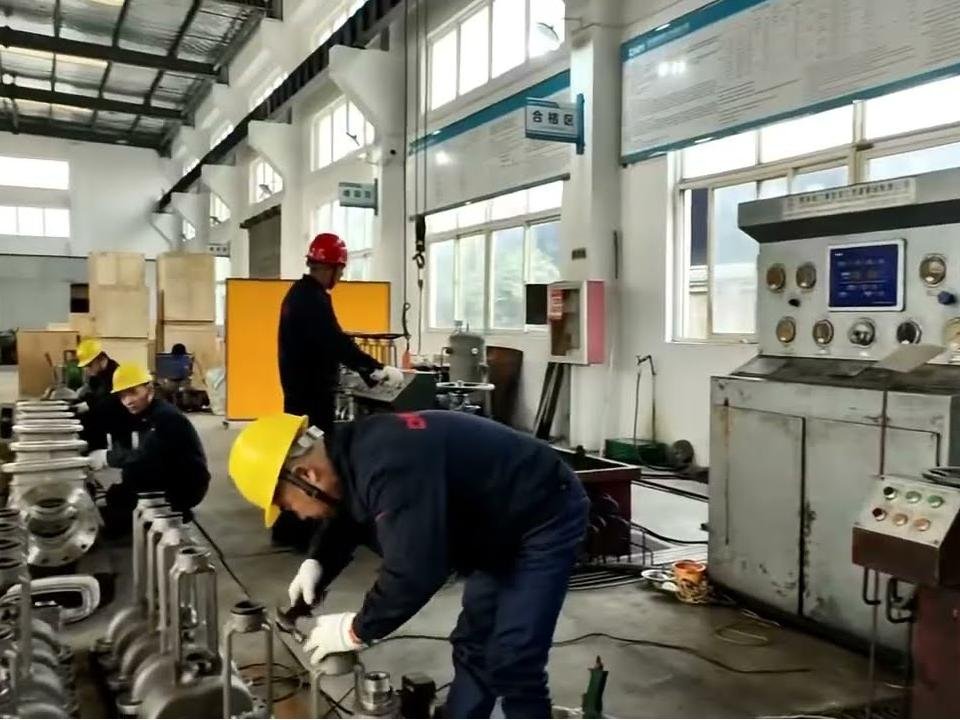
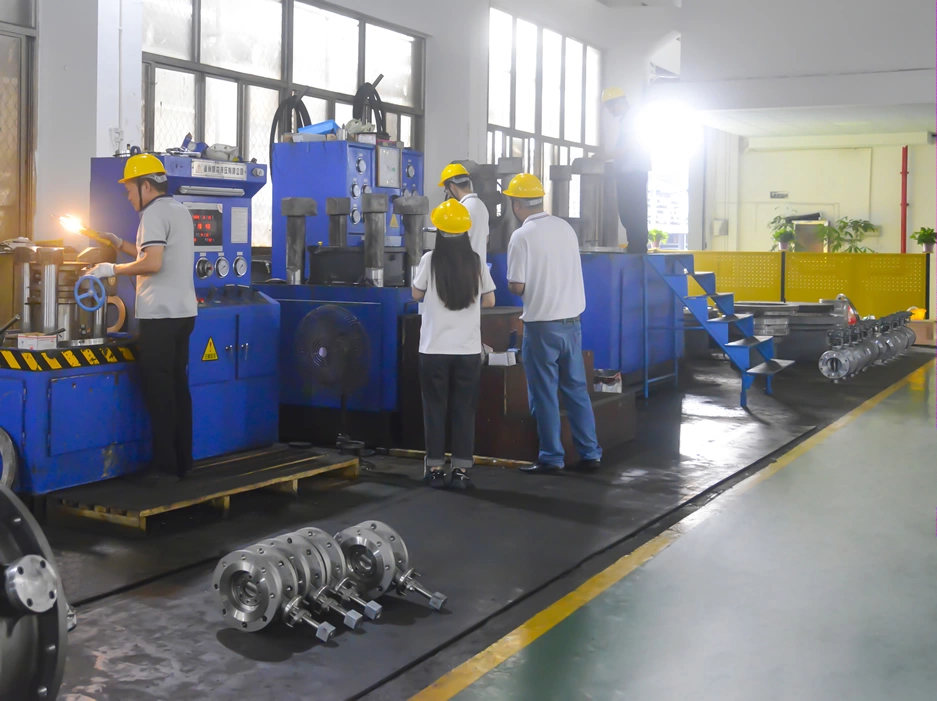
COKVER combines advanced manufacturing processes with rigorous testing protocols to ensure every industrial valve meets uncompromising quality standards, delivering reliable performance even in the most demanding operational environments.
Backed by a team of seasoned experts with decades of cumulative experience in the industrial valve sector, our company brings unparalleled industry insight and technical proficiency to every project, ensuring excellence in design, production, and customer service.
CERTIFICATES
As a responsible, compliant, and robust enterprise, COKVER holds a comprehensive range of certifications, such as RoHS, FDA, ISO9001:2015, ISO14001:2015, and CE.


EFFICIENCY
Our engineers, when designing and developing a product, not only ensure it operates efficiently and reliably but also prioritize making it easily accessible and simple to maintain for the operator.
ENGINEERING LAB
Our R&D engineering laboratory is equipped with comprehensive modern testing capacities to advance product performance development, encompassing qualification and validation testing, water hammer testing, and flow analysis testing.
DIGITAL ENGINEERING
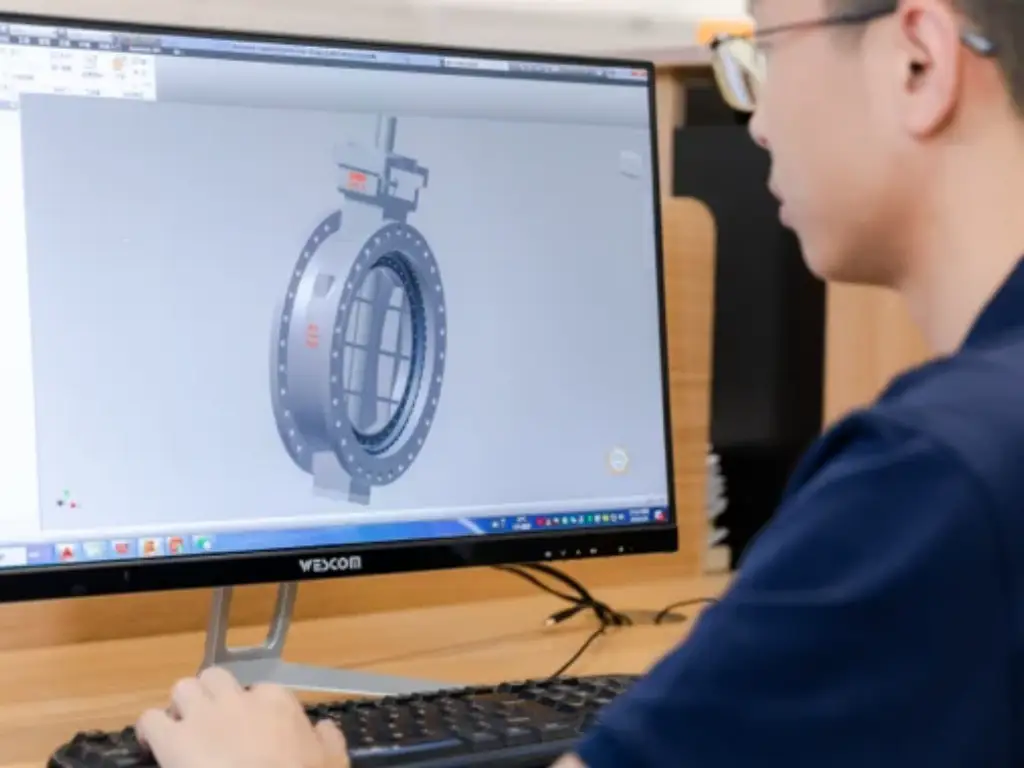
We adopt a digital modeling and simulation approach for product development, manufacturing, and lifecycle support, fostering first-time quality and reliability from the outset. Throughout this process, we model, analyze, and conduct virtual simulations of stress and flow for each specific product to unlock the maximum performance potential of our valves.
FAQ
Check our overseas customers’ frequently asked questions.
Q: How should I select the appropriate valve type?
- Medium type: Liquid, gas, steam, slurry, corrosive chemicals, etc.
- Pressure rating (PN/Class): The operating pressure and maximum pressure of the system.
- Temperature range: The maximum and minimum temperatures of the medium and environment.
- Valve function: Shut-off, regulation, check, diversion, etc.
- Connection method: Flange, butt welding, thread, clamp, etc.
- Material requirements: Materials for the valve body, valve core, and seal (e.g., WCB, CF8, 316L, PTFE, metal hard seal, etc.).
Q: What are the differences between gate valves, globe valves, ball valves, and butterfly valves? And in which scenarios are they each applicable?
- Gate valve: Features low flow resistance, suitable for shut-off scenarios requiring full open or full close, but not for flow regulation. Commonly used in large-diameter water pipes and oil pipelines.
- Globe valve: Offers excellent regulation performance but has relatively high flow resistance. Suitable for scenarios requiring precise flow regulation or high-pressure shut-off, such as steam systems and high-pressure chemical pipelines.
- Ball valve: Enables fast operation (only a 90-degree rotation for opening/closing) and has good sealing performance. Suitable for scenarios demanding fast shut-off and high leakage prevention requirements, with the widest range of applications.
- Butterfly valve: Has a compact structure, allows fast opening and closing, and is cost-effective. Suitable for large-diameter pipelines with high flow and low pressure difference, such as circulating water systems and ventilation systems.
Q: What are "soft seals" and "metal hard seals"? How to choose between them?
- Soft seal: Uses non-metallic materials such as PTFE and rubber, providing excellent sealing performance (capable of achieving zero leakage) but lacking resistance to high temperatures and wear. Suitable for clean media without particles and operating at moderate temperatures.
- Metal hard seal: Adopts metal materials such as stainless steel and Stellite alloy, featuring high temperature resistance, wear resistance, and erosion resistance. Suitable for severe operating conditions involving high temperatures (e.g., steam, flue gas) or abrasive media (e.g., particles, slurry).
Q: How to choose the valve actuation method (manual, electric, pneumatic)?
- Manual: Suitable for scenarios with infrequent operation and no remote control needs, with the lowest cost.
- Electric: Suitable for scenarios requiring remote control and integration into PLC/DCS automation systems, offering high control accuracy.
- Pneumatic: Suitable for scenarios demanding fast opening/closing and explosion-proof requirements (e.g., chemical industry, oil platforms), with fast action speed.